Belt sizing trips up more shoppers than almost any other accessory purchase, mostly because the number on the tag rarely matches the number people expect. At Nova X Leather, this is one of the most common questions we field, whether it’s a first-time buyer unsure how belt sizing relates to trouser size, or someone choosing a gift and guessing at a number. This guide walks through exactly how sizing works for men’s and women’s belts, how ratchet and handmade styles differ, and the small measuring mistakes that lead to a belt that’s just slightly wrong, so your next purchase fits correctly the first time. We’ll also cover width’s effect on length, Australian sizing conventions, and quick fixes if a belt arrives just slightly off, so you’re covered whether you’re buying your first belt or replacing one that’s finally worn out.
Leather Belt Size Guide Basics: How Belt Sizing Works
Belt sizing looks simple on the surface — a single number stamped on the tag — but that number actually represents the distance from the buckle to the middle adjustment hole, not the belt’s total length or your exact waist measurement. Understanding this one distinction clears up most of the confusion people have when a belt in their usual size doesn’t fit quite the way they expected, and it’s the foundation everything else in this guide builds on. Once this single concept clicks, every other sizing question in this guide becomes far easier to answer confidently.
Belt Size vs Trouser Size: What’s the Difference
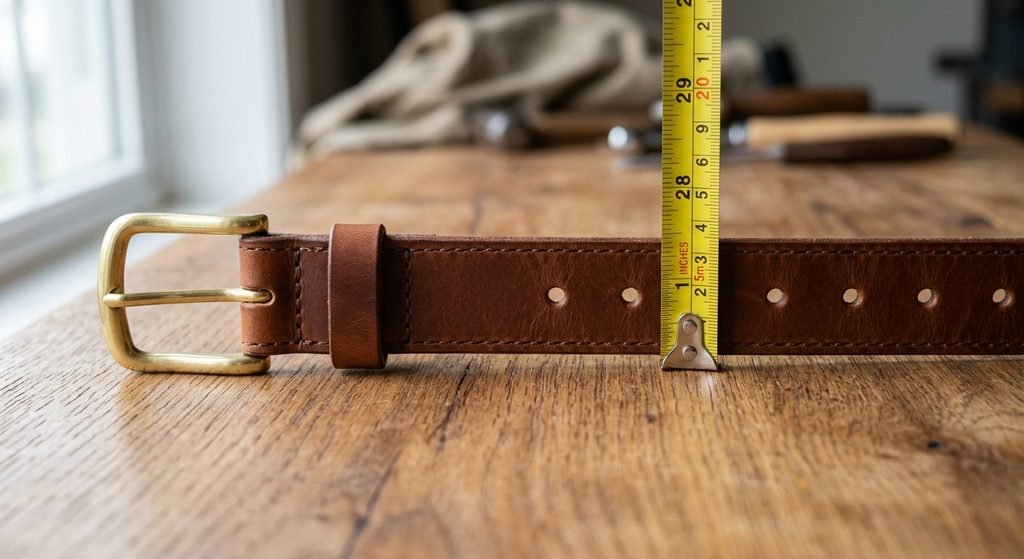
Trouser size is typically measured at the waistband itself, while belt size is measured to the middle hole, which is designed to sit at your actual waist once the belt is fastened comfortably. As a rule of thumb, belt size usually runs two inches larger than trouser size, so a 34-inch trouser waist generally calls for a 36-inch belt, though this can vary slightly between brands. This two-inch buffer accounts for the natural drape of trousers and the extra strap length needed for the belt to thread through the loops and fasten comfortably rather than sitting perfectly flush.
Standard Belt Size Increments Explained
Most belts are sold in two-inch increments — 32, 34, 36, 38 and so on — which is why sizing between two numbers is such a common problem. A belt with five or six holes typically covers about four inches of total adjustment range, two inches either side of the labelled size, which is worth remembering when you’re between sizes. If your measurement sits exactly between two increments, sizing up generally gives you more flexibility than sizing down.
Mens Leather Belt Size Guide by Waist Measurement
For a mens leather belt, getting the sizing right starts with an accurate waist measurement rather than relying on memory or an old pair of trousers that may have stretched or shrunk slightly over time. A fresh measurement, taken properly, is always more reliable than assuming your size hasn’t changed since your last purchase.
How to Measure Your Mens Leather Belt Size at Home
Wrap a soft tape measure around your waist at the point where you actually wear your trousers, not at the narrowest point of your torso, and add two inches to that number for your belt size. If you don’t have a tape measure, measuring an existing well-fitting belt from the buckle to your usual hole gives an equally reliable result, and is often the most accurate method of all since it reflects how you actually wear your belt day to day.
Mens Leather Belt Size Chart: Waist to Belt Length
As a general guide: a 30-inch trouser waist typically takes a 32-inch belt, a 32-inch waist takes a 34-inch belt, a 34-inch waist takes a 36-inch belt, and a 36-inch waist takes a 38-inch belt, continuing in two-inch steps up the range. Always check the specific brand’s size chart where available, since small variations do exist between manufacturers, particularly between local Australian brands and imported ranges.
Leather Belt for Women: Sizing Differences Explained
A leather belt for women is sized slightly differently from menswear, often following dress size or a more compact numbering system rather than the inch-based waist sizing common in mens leather belt ranges. Knowing which sizing convention a particular retailer uses before you order saves a lot of confusion and unnecessary returns.
Why a Leather Belt for Women Runs Smaller
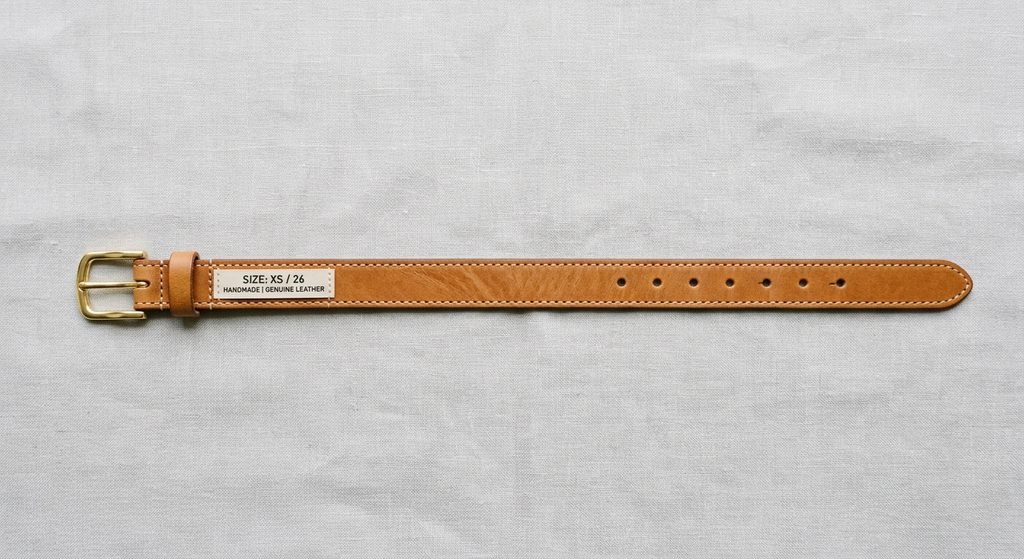
Womenswear belts are generally cut in narrower widths and shorter overall lengths to suit slimmer waist measurements and the way women’s trousers and dresses are typically tailored, so directly comparing a men’s and women’s size number rarely gives an accurate result. It’s always safer to measure your actual waist than to assume a size translates directly across ranges.
Leather Belt for Women Size Chart by Dress Size
Many womenswear ranges size belts as extra small through extra large alongside a waist measurement in inches or centimetres, roughly corresponding to dress sizes 6 through 16. When in doubt, always default to the waist measurement over the dress-size label, since dress sizing itself varies significantly between brands and can be an unreliable guide on its own.
Ratchet Leather Belt Sizing: Why It’s More Flexible
A ratchet leather belt takes a lot of the guesswork out of sizing precisely because it doesn’t rely on a fixed set of pre-punched holes the way a traditional belt does. This inherent flexibility is one of the main reasons the ratchet design has grown so popular for anyone unsure of their exact size.
Ratchet Leather Belt Sizing Without Pre-Set Holes
Because the strap has a continuous track of fine grooves rather than five or six discrete holes, a ratchet leather belt can typically be adjusted across a wider range than a traditional belt, which makes it more forgiving if you’re unsure of your exact size or expect your waist to fluctuate. This flexibility also makes ratchet belts a particularly safe choice when buying as a gift for someone whose exact size you’re not certain of.
Trimming a Ratchet Leather Belt to Fit
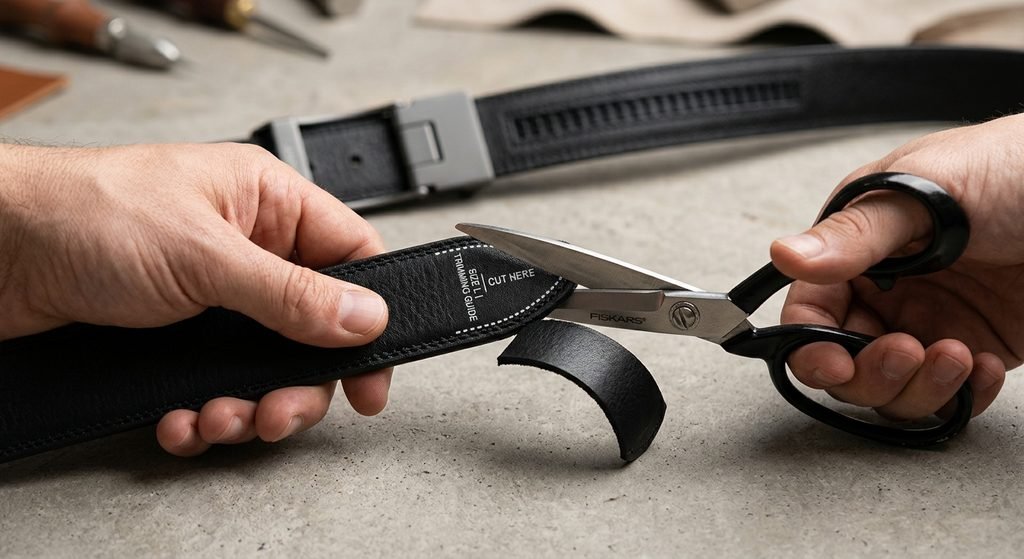
Most ratchet leather belt straps are sold slightly longer than needed and designed to be trimmed to length at home with sharp scissors, following a marked guideline on the underside of the strap, making one purchase suitable for a wider range of waist sizes than a traditional pre-holed belt. This also means a single ratchet belt can often be resized later if your waist changes, without needing to buy a new one entirely.
Handmade Leather Belt Sizing and Custom Fit Options
A handmade leather belt sometimes offers sizing flexibility that mass-produced belts simply can’t match, since smaller-batch production allows for more individual attention to length and hole placement. This is one of the more underrated benefits of buying handmade over a generic off-the-shelf strap.
Custom Length Options for a Handmade Leather Belt
Some handmade leather belt makers offer custom-length straps cut to your exact waist measurement rather than a standard size, which is particularly useful for anyone who falls well outside typical size ranges or simply wants the most precise possible fit. This level of customisation is rarely available from larger mass-market brands.
Made-to-Measure Handmade Leather Belt Sizing
For a made-to-measure order, provide your waist measurement at trouser height along with your preferred hole position, and a skilled maker can position holes exactly where you need them rather than relying on a generic spacing template. This attention to detail is part of what makes a genuinely custom handmade leather belt feel noticeably different to wear.
Leather Belt Australia Size Charts by Brand
Leather belt Australia sizing generally follows inch-based measurements similar to the UK and US, but small variations between brands make checking each retailer’s specific chart worthwhile before buying. A quick glance at the size chart before ordering takes seconds and prevents most avoidable sizing mistakes.
Leather Belt Australia Sizing Conventions
Most Australian retailers size belts in two-inch increments from around 28 inches up to 44 inches or more for larger sizes, with the size number referring to the buckle-to-middle-hole measurement described earlier in this guide rather than the belt’s full length. This consistency across most local retailers makes shopping across multiple Australian brands relatively predictable once you know your number.
Comparing Leather Belt Australia Sizes to US and UK Sizing
Australian, US and UK belt sizing all use the same inch-based system, so a US 34 and a UK 34 will generally match an Australian 34, though it’s still worth double-checking imported brands, since manufacturing tolerances can shift actual measurements by a centimetre or two. This small variance rarely matters for a traditional belt with multiple holes, but is worth noting for made-to-measure or single-hole designs.
Leather Belt Melbourne Sizing: In-Store vs Online
Whether you’re buying a leather belt Melbourne retailers stock in person or ordering online, the sizing approach differs slightly, and each method has its own way of minimising the risk of an incorrect fit. Knowing which approach suits your situation makes the whole process faster and reduces the chance of needing an exchange.
Getting Sized for a Leather Belt Melbourne In-Store
Buying in person lets you try a belt on directly and check exactly where the middle hole sits against your waistline, which removes almost all guesswork and is especially useful if you’re unsure between two adjacent sizes. Staff at a good leather goods store can also often advise on brand-specific sizing quirks you wouldn’t know from an online chart alone.
Sizing a Leather Belt Melbourne Shoppers Buy Online
When ordering online, always measure an existing belt rather than relying purely on trouser size, and check the retailer’s specific size chart and return policy in case the first size you order isn’t quite right. A little extra care at the ordering stage saves the hassle of a return process later.
Common Belt Sizing Mistakes to Avoid
A handful of recurring sizing mistakes account for most of the returns and exchanges we see, and nearly all of them are easy to avoid once you know what to look out for. Being aware of these common pitfalls before you order is the simplest way to get it right on the first attempt.
Buying a Belt in Your Trouser Size Instead of Belt Size
This is by far the most common mistake — ordering a belt in the same number as your trouser waist rather than adding the extra two inches that belt sizing requires, resulting in a belt that’s consistently too small once it arrives. Setting a mental rule to always add two inches before ordering removes this mistake almost entirely.
Ignoring Buckle Length When Sizing a Belt
Larger, chunkier buckles add a small amount of extra length beyond the strap itself, so if you’re choosing between a slim buckle and a statement buckle in the same nominal size, the finished fit can differ slightly between the two. This is a small but genuine factor worth considering for anyone choosing between multiple buckle styles on the same strap length.
How Belt Width Affects Your Size Choice
Width and length are sized independently, but they do interact in ways that are worth understanding before you buy, particularly if you’re choosing a wider strap than you’ve worn before. Overlooking this interaction is a common reason a technically correct size number can still feel slightly off once worn.
Why Wider Belts Need a Length Adjustment
A wider strap takes up slightly more room when threaded through trouser loops, so some people find they need to size up marginally on length when switching from a narrow 30mm dress belt to a wider 40mm casual strap for the fit to feel identical. This is a subtle effect, but worth testing if you’re moving to a noticeably different width than usual.
Width and Length Proportion for a Balanced Fit
As a general guide, keep width and buckle proportion in mind alongside length — a very wide belt in a short length can sit awkwardly close to the buckle’s edge, so checking both measurements together gives a more reliable result than length alone. Taking a moment to picture the finished proportion, not just the raw numbers, tends to prevent this kind of subtle sizing mismatch.
Adjusting and Re-Sizing a Leather Belt at Home
If a belt arrives close to the right size but not quite perfect, several straightforward adjustments can fix the fit without needing to return or replace it. Most minor sizing issues are genuinely fixable at home or with a quick trip to a local repairer.
How to Punch a New Hole in a Leather Belt
A simple rotary leather punch, available at most hardware or craft stores, can add a new hole in minutes; mark the spot carefully first, keep spacing consistent with the existing holes, and punch slowly to avoid a ragged edge. This is one of the easiest and most affordable fixes for a belt that’s just slightly too long or too short.
When to Have a Belt Professionally Shortened
If a belt is significantly too long even at the shortest hole, a leather repairer can professionally shorten the strap and reattach the buckle cleanly, which gives a far neater result than trimming and re-punching holes yourself at home. This is generally the better option for a valuable handmade leather belt where preserving the finish matters.
Belt Size Conversion Chart: Inches to Centimetres
For quick reference: 30 inches is roughly 76cm, 32 inches is about 81cm, 34 inches is around 86cm, 36 inches is close to 91cm, and 38 inches converts to approximately 97cm. Keeping this rough conversion in mind is handy when comparing an imported size chart listed only in centimetres.
Sizing a Belt as a Gift Without Guessing
If you can’t ask directly, check the recipient’s usual trouser size on a tag they already own and add two inches, or discreetly measure a belt already hanging in their wardrobe for the most reliable result. A ratchet leather belt is also a safer gift choice given its wider adjustment range.
Sizing Tips for Between-Size Waists
If your measurement falls between two standard sizes, sizing up rather than down is usually the safer choice, since an extra hole can always be punched but a belt that’s genuinely too short cannot be lengthened. This simple rule avoids the most common irreversible sizing mistake.
Checking Belt Length with an Old Belt
Lay your most comfortable existing belt flat and measure from the buckle’s centre pin to the hole you actually use — that measurement, rounded to the nearest labelled size, is the most reliable number to order in.
Returns and Exchanges for Incorrect Belt Sizing
Always check a retailer’s exchange policy before ordering online, particularly for handmade or made-to-measure pieces, since custom items are sometimes non-returnable once they’ve been cut and finished to a specific length.
FAQ: What Belt Size Should I Buy for a 34 Inch Waist
For a 34-inch trouser waist, a 36-inch belt is the standard recommendation, though checking the specific brand’s chart is always worthwhile if you’re between sizes.
Quick Tip: Always Measure the Loop, Not Just the Waist
Trouser loop position can sit slightly above or below your natural waist depending on the cut, so measuring where the belt will actually sit gives a more accurate result than a generic waist measurement alone.
Finding Your Perfect Fit at Nova X Leather Store
Getting belt size right comes down to a handful of reliable habits: measure to the hole you’ll actually use rather than guessing from trouser size, add roughly two inches to your waist measurement, and remember that ratchet and handmade styles both offer more flexibility than a standard pre-holed belt if you’re ever unsure. Whether you’re buying a mens leather belt, a leather belt for women, or comparing a ratchet leather belt against a traditional design, taking two extra minutes to measure properly saves the hassle of a return later. Browse the full size range at Nova X Leather Store and use this guide alongside our size chart to order with confidence the first time.