
A genuine leather belt is one of the few accessories that actually improves with age when it’s looked after properly, developing a richer colour and a softer hand-feel over years of wear rather than simply wearing out. At Nova X Leather, we get asked leather belt care questions almost as often as we get asked about sizing, and the honest truth is that most damage we see isn’t from heavy use — it’s from neglect, the wrong products, or storage mistakes that are easy to avoid once you know what to look for. This guide covers everything from daily habits to seasonal care, so whichever belt style you own, it lasts for years rather than months. We’ll walk through climate-specific tips for Australian conditions, care differences between handmade and ratchet styles, and the small mistakes that quietly shorten a belt’s life without most owners ever noticing.
Leather Belt Care Basics Every Owner Should Know
Before getting into specific routines, it helps to understand what leather actually is: a natural, fibrous material that needs a small amount of moisture and oil to stay flexible, much like skin. Leather belt care, at its core, is about maintaining that balance — not too dry, not oversaturated — while keeping dirt, salt and grit from working into the fibres and grinding away at the surface over time. Get this balance right and a well-made belt can easily outlast a decade of regular wear, often ageing into a richer, more characterful piece rather than a tired one.
Understanding Leather Belt Care: Full-Grain vs Corrected-Grain
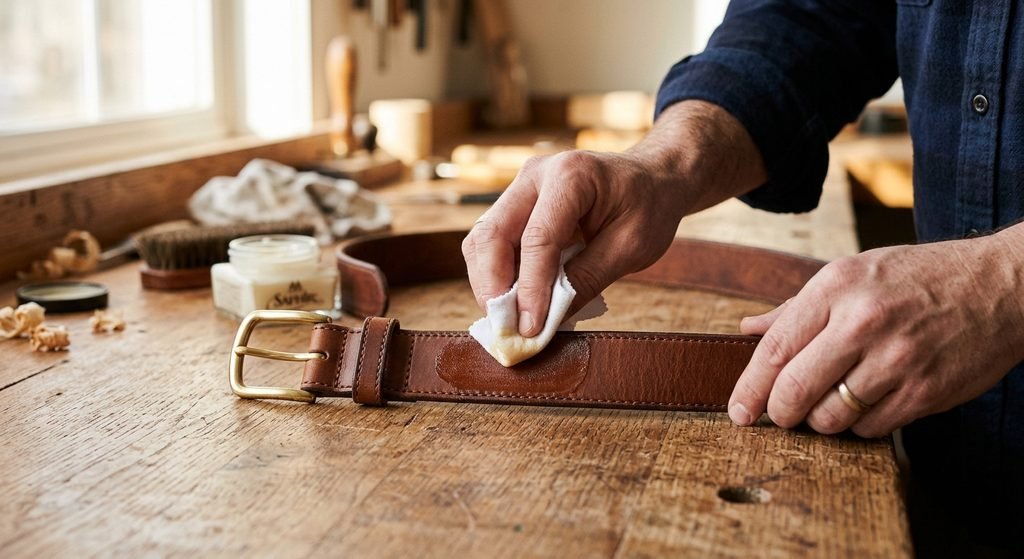
Full-grain leather retains the outermost, densest layer of the hide and responds best to conditioning, developing a natural patina over time. Corrected-grain or bonded leather has been sanded, stamped or reconstructed, and often has a coating that limits how much conditioner can actually absorb, meaning care routines that work beautifully on full-grain can sometimes do very little for lower-grade materials. Knowing which type you own before you start any care routine will save you from wasting product or expecting results the material simply can’t deliver.
Essential Leather Belt Care Tools and Products
A basic care kit doesn’t need to be complicated: a soft, lint-free cloth, a small horsehair brush, a mild leather cleaner, and a quality leather conditioner or balm cover almost every situation you’ll encounter. Avoid anything with silicone or heavy waxes unless it’s specifically designed for leather, since these can clog the pores of the hide and prevent it from breathing properly over time. A modest kit like this typically costs less than a single belt and, used correctly, will outlast several belts over its lifetime.
Daily Leather Belt Care Habits for a Mens Leather Belt
Most of the wear and tear on a mens leather belt happens through small, repeated daily actions rather than any single dramatic event, so a few simple habits go a long way toward extending its life without adding much time to your routine. None of these habits take more than a minute, but they compound significantly over months and years of daily wear.
Wiping Down a Mens Leather Belt After Daily Wear
A quick wipe with a dry or barely damp cloth at the end of the day removes surface dust, sweat and oils before they have a chance to settle into the grain. This thirty-second habit is genuinely one of the highest-impact things you can do for long-term leather belt care, and it costs nothing beyond the time it takes — many people simply do it while getting changed in the evening without it feeling like an extra chore.
Rotating Belts to Extend Mens Leather Belt Life
Wearing the same mens leather belt every single day means it never gets a chance to fully rest and reshape between wears, which accelerates fatigue at the fold points near the buckle. Owning even just two belts in rotation — perhaps a ratchet leather belt for the office and a traditional buckle for weekends — roughly doubles the lifespan of each one, and gives the leather fibres time to relax back into shape between wears.
Leather Belt Australia Climate Care Considerations
Leather belt Australia owners face a genuinely wide range of conditions across the country, and adjusting your care routine to your local climate makes a bigger difference than most generic care guides account for. A routine built for a UK winter simply doesn’t translate well to a Queensland summer, so it’s worth thinking locally rather than following imported advice wholesale.
Leather Belt Australia Summer Heat and Sun Care
Direct sun and dashboard-level heat dry leather out fast, causing the surface to stiffen and eventually crack at stress points. During summer, avoid leaving a belt on a car seat, near a window, or anywhere it will sit in direct sunlight for extended periods, and condition slightly more often than you would during cooler months to counteract the extra moisture loss.
Leather Belt Australia Humidity and Coastal Care
Coastal humidity and salt air both accelerate wear on stitching thread and metal hardware, so belts worn regularly near the ocean benefit from more frequent wipe-downs and a slightly more vigilant eye on buckle corrosion than belts worn purely inland. Salt residue in particular can be abrasive over time if left to build up unnoticed.
Cleaning and Conditioning a Handmade Leather Belt
A handmade leather belt typically uses higher-grade, more absorbent leather than mass-produced alternatives, which means it responds especially well to proper cleaning and conditioning — but also shows neglect more visibly than a heavily coated, lower-grade strap would. That responsiveness is a genuine benefit for anyone willing to put in a small amount of regular care.
Step-by-Step Cleaning for a Handmade Leather Belt
Start with a dry brush to lift any loose dirt, then wipe with a cloth barely dampened with water or a mild leather cleaner, working in small circular motions rather than scrubbing. Let it air dry naturally away from direct heat before moving on to conditioning, since conditioning damp leather can trap moisture inside the fibres and lead to a musty smell developing over time.
Conditioning Frequency for a Handmade Leather Belt
Most handmade leather belts benefit from conditioning every two to three months with normal use, or slightly more often in hot, dry climates. Apply a small amount, let it absorb for several minutes, then buff off any excess with a clean cloth — more product isn’t better, and over-conditioning can leave the surface feeling greasy or overly soft, which also makes the leather more prone to stretching under normal wear.
Ratchet Leather Belt Care and Mechanism Maintenance
A ratchet leather belt needs everything a traditional belt does, plus a small amount of attention to the mechanical hardware that makes it work, since that mechanism is the one part of the belt that can’t simply be conditioned like leather. Thinking of it as two separate components — strap and mechanism — each with their own light maintenance needs, makes the routine easier to remember.
Cleaning the Ratchet Leather Belt Groove Track
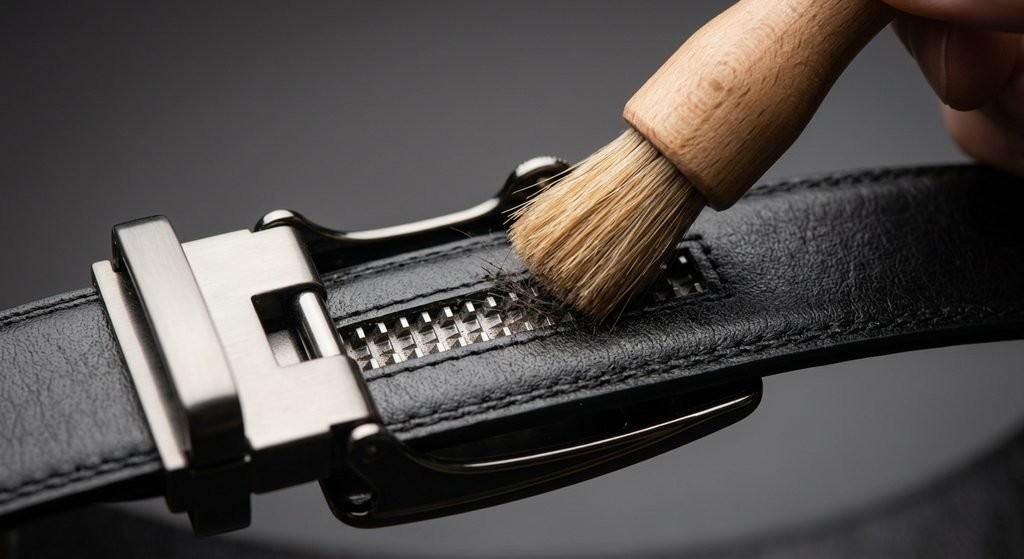
Run a dry, soft-bristled brush along the groove track every few weeks to clear out lint, dust and pocket debris that can accumulate and cause the latch to catch unevenly. This is a quick habit that keeps the fine adjustment feeling as precise as the day you bought it, and it’s one of the few maintenance tasks unique to the ratchet design.
Lubricating a Ratchet Leather Belt Buckle Mechanism
If the release lever starts feeling stiff, a tiny amount of dry PTFE lubricant applied to the internal latch — never oil, which attracts more dust — usually restores smooth action. Most manufacturers recommend this only occasionally, as over-lubricating can actually make the debris problem worse rather than better, attracting exactly the lint and dust you’re trying to avoid.
Leather Belt for Women: Care Tips for Delicate Straps
A leather belt for women is often slimmer and sometimes made from softer, more supple leather than menswear styles, which means care routines need a slightly gentler touch to avoid stretching or marking the strap. The same core principles apply, just scaled down and applied with a lighter hand throughout.
Leather Belt for Women: Caring for Slim Straps
Slim straps have less surface area to distribute stress, so they benefit from more frequent light conditioning in smaller amounts rather than infrequent heavy applications, which can oversaturate a thinner hide more easily than a wider mens strap.
Protecting Buckle Finishes on a Leather Belt for Women
Delicate gold-tone or antique finishes common on a leather belt for women can be damaged by harsh metal polish, so stick to a soft dry cloth for everyday buffing and only use specialist jewellery-safe cleaning products if tarnish becomes noticeable.
Storing a Leather Belt to Prevent Damage
How a belt is stored between wears has a bigger impact on its long-term shape than most people realise, and a few small adjustments to your storage habits can prevent creasing, warping and mildew before they start. Storage is one of the most overlooked parts of leather belt care simply because it happens passively, out of sight, between wears.
Best Way to Hang or Roll a Leather Belt
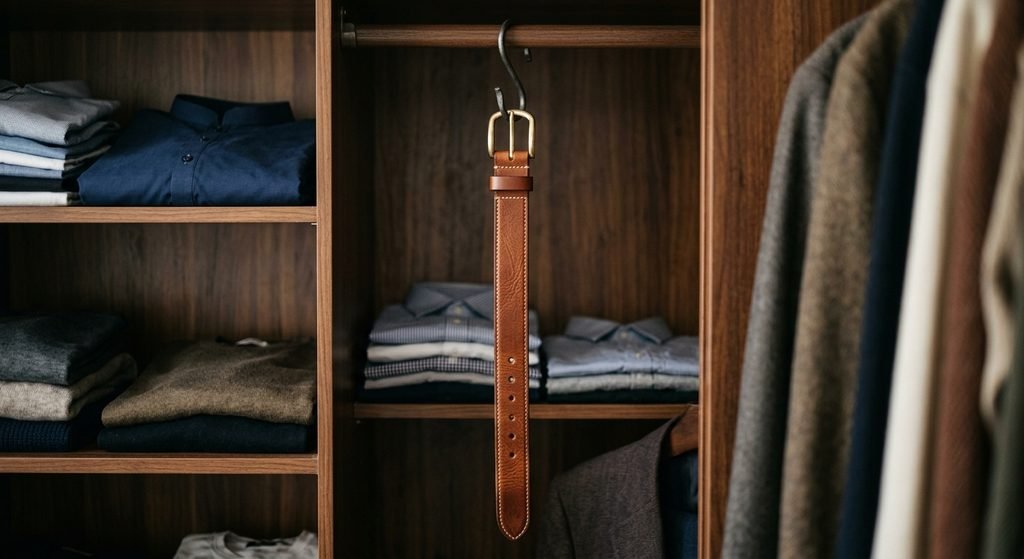
Hanging a belt straight from the buckle, or loosely rolling it with the buckle on the outside, both prevent the sharp, permanent creases that coiling it tightly in a drawer can cause over time. Avoid folding a belt in half, which stresses the leather at a single fixed point and can leave a crease that never fully relaxes out.
Avoiding Moisture Damage When Storing Belts
Never store a belt while damp, and avoid airtight containers or plastic bags for long-term storage, since leather needs to breathe. A cool, dry space with reasonable airflow prevents both mildew and the brittleness that comes from trapped humidity, and a breathable cotton bag is a better option than plastic if you want extra dust protection.
Leather Belt Melbourne Care Products and Where to Find Them
For anyone searching leather belt Melbourne care advice specifically, local conditions and product availability both play a role in building the right routine for your climate and lifestyle. Melbourne’s shifting weather across a single day makes consistent care habits slightly more valuable than in more stable climates.
Where to Find Leather Belt Melbourne Care Products
Quality saddlery shops, specialist shoe-care retailers and some leather goods stores across Melbourne stock proper leather conditioners and cleaners, generally better suited to genuine leather than generic supermarket shoe polish, which is often formulated primarily for shine rather than long-term leather health. Reading the product label for genuine leather suitability before buying is always worth the extra minute.
Professional Leather Belt Melbourne Repair Services
For deeper repairs — broken stitching, a damaged buckle, or a strap that needs re-punching — a local leather repairer or cobbler can usually restore a well-made belt rather than needing a full replacement, which is often more cost-effective than buying new. It’s worth locating a trusted repairer before you actually need one, rather than searching in a hurry once damage has already occurred.
Common Leather Belt Care Mistakes to Avoid
Most leather belt damage we see actually comes from well-intentioned but misguided care, rather than from a lack of care altogether, so knowing what not to do is just as important as knowing the right routine. A little restraint, applied consistently, usually beats an aggressive care routine applied occasionally.
Overcleaning and Over-Conditioning Mistakes
Cleaning or conditioning too frequently can strip natural oils or oversaturate the leather, leaving it either dried out or unnaturally soft and prone to stretching. Once every two to three months for conditioning, and cleaning only when visibly needed, is usually enough for a belt in regular rotation — more frequent attention rarely translates into better long-term condition.
Using the Wrong Products on Leather Belt Hardware
Household cleaning products, especially anything containing ammonia or bleach, can strip plating from buckle hardware almost instantly. Stick to products specifically labelled safe for the metal finish in question, and test on an inconspicuous area first whenever you’re unsure, since even leather-safe products can occasionally react differently with a particular dye or finish.
Long-Term Leather Belt Care for Lasting Durability
Consistent, moderate care over years matters far more than occasional intensive treatment, and recognising the early signs of wear lets you address small issues before they become bigger, harder-to-fix problems. Thinking in terms of years rather than weeks is the mindset shift that separates a belt that lasts from one that doesn’t.
Signs Your Leather Belt Needs Replacing
Deep cracking across the grain, stitching that’s fraying beyond a simple repair, or a buckle mechanism that no longer holds reliably are all signs a belt has reached the end of its practical life, even if the leather itself still looks reasonable at a glance. Catching these signs early and consulting a repairer can sometimes extend a belt’s life by several more years rather than replacing it outright.
How Proper Care Extends a Leather Belt’s Lifespan
A genuine leather belt cared for consistently can realistically last ten years or more, compared to a neglected one that might need replacing within two or three, making the small time investment in proper leather belt care one of the better value habits in anyone’s wardrobe routine. Over a decade, that difference can mean the cost of one well-cared-for belt versus three or four replacements.
Removing Stains from a Genuine Leather Belt
Blot fresh stains immediately with a dry cloth rather than rubbing, which can push the substance deeper into the grain; for oil-based stains, a light dusting of cornstarch left overnight can help draw the oil out before cleaning. Patience matters more than speed here — let the cornstarch fully absorb rather than brushing it away too soon.
Drying a Wet Leather Belt Safely
Pat away excess moisture with a dry towel and let the belt air dry naturally at room temperature, never using a hairdryer, heater or direct sun, all of which can cause the leather to shrink or stiffen unevenly. A light conditioning application once fully dry helps restore any oils lost during the drying process.
Polishing Buckle Hardware Without Damage
A soft microfibre cloth handles most day-to-day polishing safely; reserve dedicated metal polish for solid, unplated hardware only, since plated finishes can wear through with repeated abrasive polishing, revealing a different-coloured base metal underneath that’s difficult to disguise.
Seasonal Leather Belt Care Checklist
Condition before summer to build up moisture resistance ahead of heat exposure, check stitching and buckle hardware each autumn, and store away any rarely-worn belts somewhere dry and ventilated over the wetter winter months. This simple seasonal rhythm keeps care spread out naturally rather than becoming a single overwhelming task.
Travel Care Tips for a Leather Belt
Roll rather than fold a belt when packing, keep it away from liquids and toiletries in your bag, and give it a quick wipe-down on arrival if it’s been exposed to a different climate or humidity level than you’re used to. A small travel-size conditioner wipe is a useful addition to any packing list for longer trips.
FAQ: How Often Should You Condition a Leather Belt
For most belts in regular rotation, conditioning every two to three months is enough; increase slightly in hot, dry climates and reduce if the leather ever starts to feel noticeably soft or oily.
Quick Tip: Testing Leather Conditioner Before Full Application
Always test a new conditioner on a small, hidden patch of the strap first and wait a few hours, since some products can darken certain leather finishes more than expected.
Keeping Your Belt in Top Condition with Nova X Leather Store
Good leather belt care isn’t complicated, but it is consistent — a quick wipe-down after wear, sensible storage, occasional conditioning, and knowing which products to avoid will keep almost any genuine leather belt looking and performing well for years. Whether you own a slim dress belt, a rugged 40mm ratchet leather belt, or a delicate leather belt for women, the same core principles apply: moderate moisture, clean hardware, and a little patience rather than heavy-handed treatment. If your current belt is showing its age, browse the current range at Nova X Leather Store and pair your next purchase with a care routine that actually makes it last.