A quality leather dog collar is built to last years, but only if it’s looked after the way it deserves — daily wear outdoors, mud, rain and sun exposure all take their toll faster than most owners expect. At Nova X Leather, leather dog collar care is one of the questions we field most often, and the honest truth is that most damage we see isn’t from heavy use, it’s from a few small habits that are easy to fix once you know what to look for. This guide covers everything from daily wipe-downs to seasonal care, handmade and Hermann Oak specific advice, and martingale mechanism maintenance, so whichever collar your dog wears, it lasts for years rather than months. We’ll also cover Australian climate considerations, common mistakes, and the early warning signs that a collar has reached the end of its safe working life.
Before getting into specific routines, it helps to understand what leather actually needs to stay in good condition: a balance of moisture and natural oils, kept clean of dirt, salt and grit that grinds away at the surface over time. Leather dog collar care, at its core, is about maintaining that balance consistently rather than intervening heavily only when damage is already visible, since prevention is always easier than repair once a collar has started to suffer.
Full-grain leather retains the dense outer layer of the hide and responds well to conditioning, developing a natural patina with age. Corrected-grain or bonded leather has been sanded or reconstructed with a coating that limits how much conditioner can actually absorb, meaning the same care routine can produce very different results depending on which type your collar is made from, so it’s worth identifying which one you own before you begin.
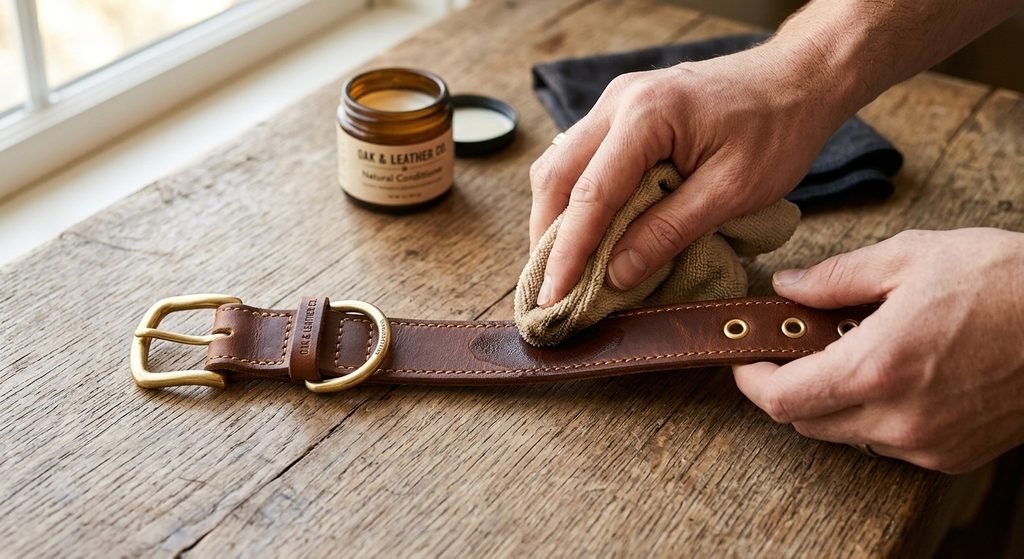
A simple care kit covers almost every situation: a soft cloth, a small brush, a mild leather cleaner, and a quality leather conditioner. Avoid silicone-heavy products unless specifically designed for leather, since these can clog the hide’s natural pores and prevent it from breathing properly over time. A modest kit like this typically costs less than a single premium collar and lasts through several replacement cycles.
Most of the wear on a leather dog collar happens gradually through everyday walks rather than any single dramatic event, so a few simple daily habits go a long way toward extending its working life. None of these habits take more than a minute, but they compound significantly over months and years of daily wear.
A quick wipe with a dry or barely damp cloth after a walk removes dirt, saliva and moisture before it has a chance to settle into the grain. This thirty-second habit is genuinely one of the highest-impact things you can do for long-term leather dog collar care, and many owners simply fold it into their existing after-walk routine.
While wiping down the collar, take a moment to glance at the stitching and buckle hardware for any early signs of fraying or loosening, since catching a small issue early is far easier to fix than dealing with a fully failed stitch line later, and it only adds a few seconds to a habit you’re already doing.
Leather dog collar Australia owners deal with a genuinely wide range of conditions across the country, and adjusting care habits to your local climate makes a bigger difference than a generic, one-size-fits-all care guide typically accounts for. What works for a Sydney apartment dog won’t necessarily suit a working dog in outback Queensland.
Direct sun and hot car interiors dry leather out quickly, causing stiffening and eventual cracking at stress points like buckle holes. During summer, avoid leaving a collar in direct sunlight for extended periods, and condition slightly more often to counteract the extra moisture loss, particularly for dogs walked regularly in the hottest part of the day.
Coastal humidity and salt air accelerate wear on stitching thread and metal hardware, so collars worn regularly near the beach benefit from more frequent wipe-downs and closer attention to buckle corrosion than collars used purely inland, where the air is generally drier and less abrasive to hardware over time.
A handmade leather dog collar typically uses higher-grade, more absorbent leather than mass-produced alternatives, which means it responds especially well to proper cleaning and conditioning, but also shows neglect more visibly than a heavily coated, lower-grade collar would. That responsiveness rewards owners who commit to even a modest care routine.
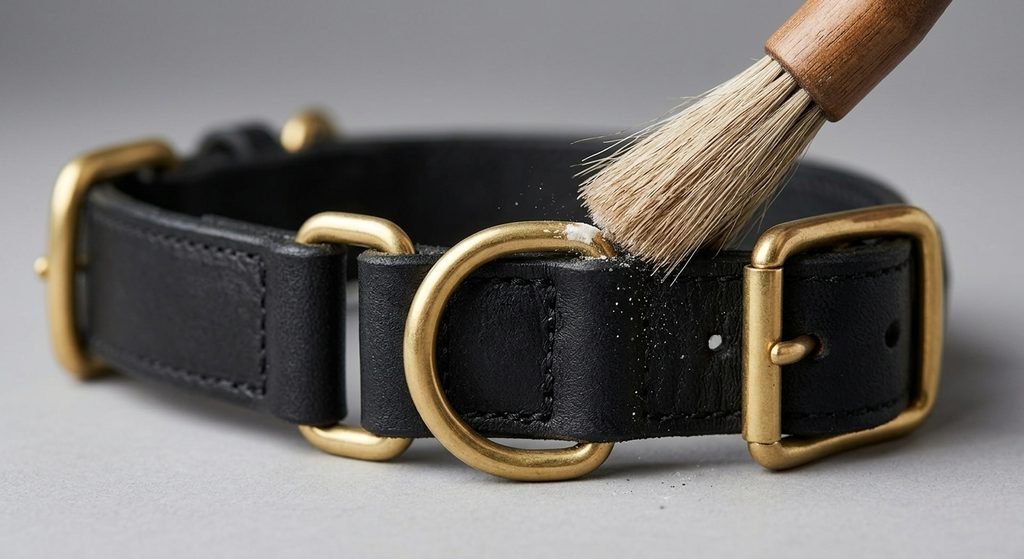
Start with a dry brush to lift loose dirt, then wipe with a cloth barely dampened with water or mild leather cleaner, working gently rather than scrubbing. Let it air dry away from direct heat before conditioning, since conditioning damp leather can trap moisture inside the fibres and lead to a musty smell developing over time.
Most handmade leather dog collars benefit from conditioning every two to three months with regular use, slightly more often in hot, dry climates. Apply a small amount, let it absorb, then buff off excess — more product isn’t better and can leave the surface feeling greasy or oversaturated over time.
A martingale leather dog collar needs everything a classic collar does, plus a small amount of attention to the moving loops and connection points that make the design work as intended. Thinking of it as two components with slightly different maintenance needs makes the routine easier to remember.
Run a dry, soft-bristled brush along the control loop and connection area every few weeks to clear out dirt and debris that can accumulate and affect how smoothly the collar tightens and releases under tension. A build-up here can subtly reduce how effectively the safety mechanism functions over time.
The stitching where the control loop meets the larger loop carries repeated stress every time your dog pulls, so it’s worth inspecting this specific point more closely than the rest of the strap during routine checks, since it’s the single point most likely to show early signs of wear on this style.
A Hermann Oak leather dog collar is built from a particularly dense, vegetable-tanned hide, which affects both how it should be cared for early on and how it behaves once fully broken in. This leather rewards a slightly different early care approach than softer, more common commercial leather.
Because this leather starts firmer than average, a new Hermann Oak leather dog collar benefits from gentle, regular handling and light conditioning during the first few weeks to help it soften naturally into a comfortable, supple fit. Rushing this stage with heavy conditioning rarely speeds things up and can oversaturate the hide instead.
Once broken in, a Hermann Oak leather dog collar follows a similar conditioning schedule to other quality leathers — roughly every two to three months — though its density means it tends to hold condition slightly longer between applications than softer, lower-grade leather, making it a genuinely low-maintenance option long-term.
How a collar is stored between walks affects its long-term shape more than most owners realise, and a few small storage habits prevent creasing and mildew before they start. This is one of the most overlooked aspects of leather dog collar care simply because it happens passively, out of sight.
Hanging a collar from a hook, or loosely looping it rather than folding it tightly, prevents the sharp creases that cramped storage in a drawer can cause over time, particularly at the buckle fold point, where repeated folding in the same spot can eventually weaken the leather.
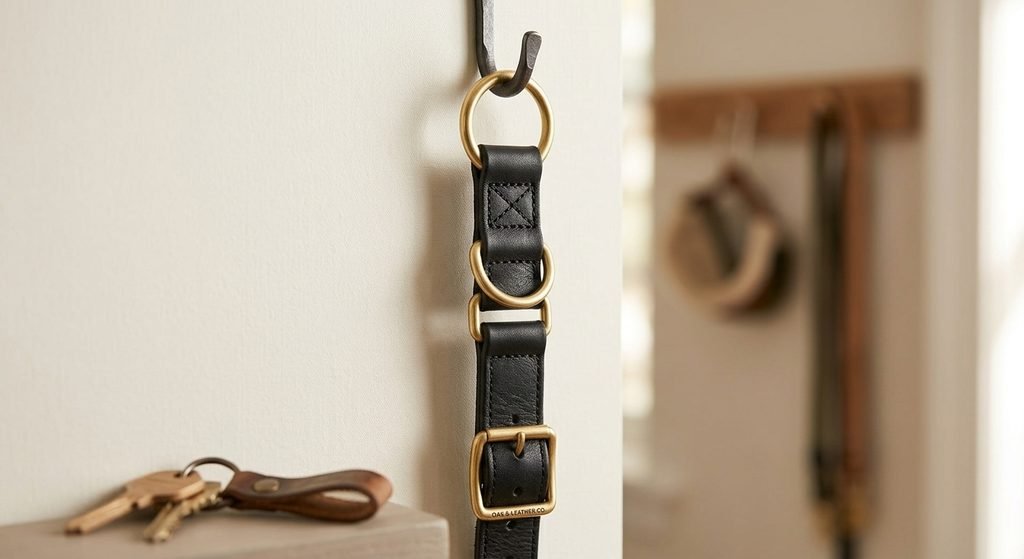
Never store a collar while still damp, and avoid airtight containers for long-term storage, since leather needs to breathe. A cool, dry, well-ventilated space prevents both mildew and the brittleness that trapped humidity causes, and a breathable fabric bag is a better option than plastic for dust protection.
For anyone searching leather dog collar Melbourne care advice specifically, local product availability and repair options both play a role in building a sustainable long-term care routine. Melbourne’s changeable weather across a single day also makes consistent care habits slightly more valuable than in more stable climates.
Saddlery suppliers and specialist leather goods stores across Melbourne generally stock conditioners and cleaners better suited to genuine leather than generic supermarket alternatives, which are often formulated primarily for shine rather than long-term leather health. Checking the label for genuine leather suitability is always worth the extra minute.
For deeper repairs — broken stitching, a damaged buckle, or a martingale loop needing reattachment — a local leather repairer can often restore a well-made collar rather than needing a full replacement, which is usually more cost-effective than buying new, particularly for a handmade or Hermann Oak collar.
Most dog collar leather damage we see actually comes from well-intentioned but misguided care rather than neglect altogether, so knowing what not to do is just as important as knowing the right routine. A little restraint, applied consistently, usually beats an aggressive routine applied occasionally.
Cleaning or conditioning too frequently can strip natural oils or oversaturate the leather, leaving it either dried out or unnaturally soft. Once every two to three months for conditioning, and cleaning only when visibly needed, is usually enough for a collar in regular use, and more frequent attention rarely improves the outcome.
Household cleaning products, especially anything containing ammonia or bleach, can strip plating from buckle and D-ring hardware almost instantly, so stick to products specifically labelled safe for the metal finish in question, and test on a small area first whenever you’re unsure.
Consistent, moderate care over years matters far more than occasional intensive treatment, and recognising early signs of wear lets you address small issues before they become bigger, harder-to-fix problems. Thinking in terms of years rather than weeks is the mindset shift that separates a collar that lasts from one that doesn’t.
Deep cracking across the strap, stitching fraying beyond a simple repair, or a buckle that no longer holds reliably are all signs a collar has reached the end of its practical, safe life, even if the leather still looks reasonable at a glance. Safety should always take priority over trying to extend a genuinely failing collar’s life.
A genuine leather dog collar cared for consistently can realistically last many years, compared to a neglected one that might need replacing within a year or two, making the small time investment in proper care one of the better value habits in any dog owner’s routine, both financially and for your dog’s ongoing safety and comfort.
Let mud dry fully before brushing it off rather than wiping it in while wet, which can push dirt deeper into the grain; for stubborn stains, a mild leather-safe cleaner applied with a soft cloth usually lifts the remainder.
Pat away excess moisture and let the collar air dry naturally at room temperature, never using a hairdryer or direct heat, which can cause the leather to shrink or stiffen unevenly.
A soft microfibre cloth handles most day-to-day polishing safely; reserve dedicated metal polish for solid, unplated hardware only, since plated finishes can wear through with repeated abrasive polishing.
Condition before summer to build up moisture resistance ahead of heat exposure, check stitching and hardware each autumn, and ensure any rarely-used collars are stored dry and ventilated over the wetter winter months.
Rinse off salt water and sand with a damp cloth as soon as practical after a beach walk, and give the collar a full clean and light conditioning once home, since salt residue left untreated is particularly abrasive to both leather and hardware.
For most collars in regular use, conditioning every two to three months is sufficient; increase slightly in hot, dry climates and reduce if the leather starts feeling noticeably soft or oily.
Leather can shift very slightly after a deep clean and conditioning session, so it’s worth rechecking the two-finger fit rule once the collar is fully dry, rather than assuming the fit is unchanged.
Good leather dog collar care isn’t complicated, but it is consistent — a quick wipe-down after walks, sensible storage, occasional conditioning, and knowing which products to avoid will keep almost any quality collar looking and performing well for years. Whether you own a handmade leather dog collar, a durable Hermann Oak leather dog collar, or a martingale style with moving parts to maintain, the same core principles apply: moderate moisture, clean hardware, and consistent rather than heavy-handed attention. If your current collar is showing its age, browse the current range at Nova X Leather Store and pair your next purchase with a care routine that actually makes it last.